Twelve years with Laravel: growing alongside a framework
From 2014 to 2026, twelve years with Laravel — a story of maturing with a tool, outgrowing it, and choosing it again.

When I first encountered Laravel 4 in 2014, picking up a framework was a genuine turning point for me. I had been writing raw PHP, stitching files together with include, and managing database operations with hand-rolled SQL queries. The first thing Laravel impressed upon me was a sense that everything had a place. Route, controller, model, view — everything was where it belonged, and it all worked together.
Twelve years later I am still using Laravel. The framework has changed over that time, and so have I. Looking back at the relationship, I notice an interesting pattern: the maturation happened together.
The early years: what the framework taught us
During the Laravel 4 and 5 era, the framework taught me a great deal. Eloquent ORM, middleware, service providers, events and listeners — these were all abstract concepts, but Laravel presented them in a concrete, tangible way.
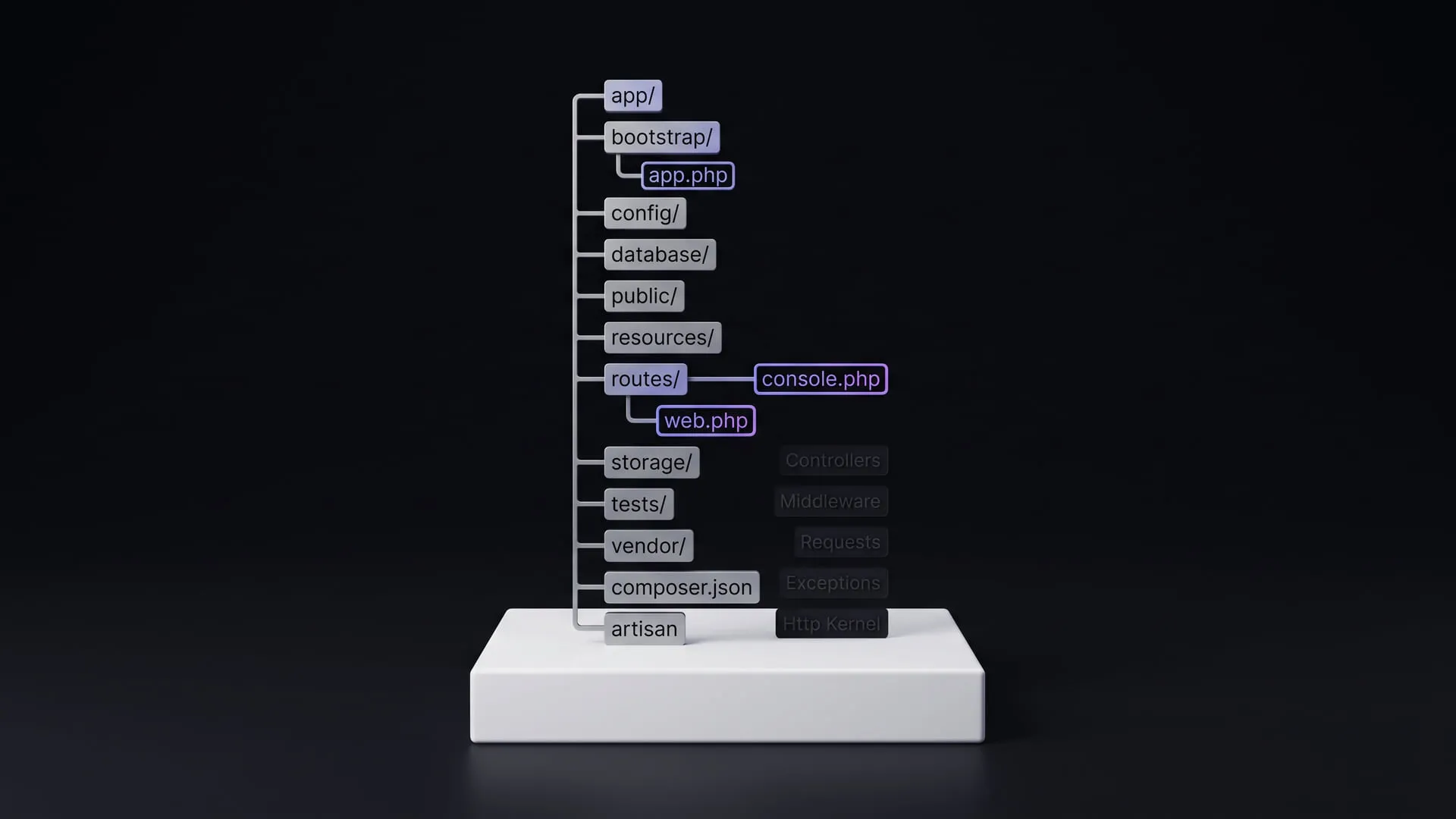
In that period I also ran headlong into the framework’s pitfalls. Bloated controller classes, fat models stuffed with every concern imaginable, chaos inside app/Http/Controllers. These were my mistakes, not the framework’s, but Laravel’s structure also made those mistakes easy — convenience sometimes invites laziness.
The middle years: understanding the framework
In my senior years my relationship with Laravel shifted. I no longer just wanted to use Laravel; I wanted to understand it. How does the service container actually work? What exactly does Eloquent’s lazy loading mechanism do under the hood? How does the middleware pipeline flow?
Asking those questions made me a better user of the framework, but it also gave me a clear picture of its limits. Some things in Laravel are unnecessarily complex, or unnecessarily magical. Magic features are great for rapid prototyping, but inside a large codebase, knowing where to look can become genuinely difficult.
During this phase I started preferring approaches like action classes and form requests over the patterns the framework itself promotes. I evaluated community packages from Composer more selectively. I came to understand that I was not obligated to use every feature Laravel put in front of me.
The later years: making peace with the tool
By the time I reached a staff level, my relationship with Laravel entered a third phase: making peace with it. You do not have to like every design decision a framework makes. You can dislike certain things, say you would have done some choices differently — and still work with the tool effectively.
I approached the changes in Laravel 10 and 11 with that perspective. Stricter enforcement of type declarations, the effort to slim down the skeleton, the ability to anticipate the boundaries of additions like Pulse and Reverb — these questions moved away from “is this brilliant or terrible?” toward “does this fit my problem?”
<?php

// Laravel 11's slim skeleton; middleware and route definitions live in bootstrap/app.php
use Illuminate\Foundation\Application;

return Application::configure(basePath: dirname(__DIR__))
    ->withRouting(
        web: __DIR__.'/../routes/web.php',
        api: __DIR__.'/../routes/api.php',
    )
    ->withMiddleware(function ($middleware) {
        $middleware->api(append: [
            \App\Http\Middleware\EnsureTokenIsValid::class,
        ]);
    })
    ->create();
This code did not exist in Laravel three years ago. As the skeleton slims down, configuration becomes more explicit; the magic recedes. That is a direction I appreciate.
What it means to grow with a tool
In my view, staying with a tool for a long time is not about blindly embracing it. It is equally about letting go of specific expectations you bring to it. A framework is a tool; the problem is mine, the solution is mine. The framework is simply a platform for expressing that solution.
Over twelve years, I have disappointed Laravel more than once, and it has disappointed me. Every major version jump came with migration pain. Every new feature carried a learning cost. But on balance, this tool has carried a significant portion of my career.
I have tried other languages and frameworks. Go, Python, React, Vue — I have used all of them and taken something from each. But as a PHP developer, Laravel has remained my primary tool. The reason is that over twelve years the ecosystem, the language, and the community have all matured together. That accumulated maturity is compounding and genuinely valuable.
When I start a new project, choosing Laravel is not yet a decision I make without thinking; I always run a short evaluation. But most of the time, that evaluation points back to Laravel. Twelve years carry a reasonable weight for that reason.
The research behind this post
Laravel's preload curve: 123 files buy eight times what the last 1,912 do
How far can a curated preload take Laravel, and what does each slice cost in start-up time?
Finding
The curve is not proportional to volume. The first 1,592 files — Laravel's own framework — buy 30 ms and add 1.2 seconds to start-up. The next 1,094 Symfony files buy 9.5 ms for free. The **123 files** after that (psr, carbon) buy 15.7 ms, more than the 1,094 before them. And the last 1,912 buy 1.8 ms while adding another 1.2 seconds. So the blanket preload the earlier record measured as a ceiling is the worst point on the curve that is not the origin: stopping at 2,809 files gives 12.77 ms for 1,514 ms of start-up, while 4,721 files ask 2,691 ms to reach 10.96 ms.
measured 25 days ago
Seven PHP frameworks under identical load: the gap narrows as soon as the request does real work
On the same hardware, the same PHP build and the same seven routes, how many requests a second do Laravel, Symfony, CodeIgniter, Yii2, Phalcon, Laminas and Slim serve, and at what latency?
Finding
On an empty route the fastest is 4.4× the slowest (Slim 25,975, Laravel 5,966 req/s). As soon as the request does real work the gap closes: 3.7× for a single row from the database, 3.5× for twenty rows. Phalcon is third on an empty route and fifth once a query is involved — being a C extension buys nothing while the process waits on MySQL. And the expensive decision is not the framework: Laravel's own default `web` middleware group takes the same response from 5,858 to 2,176 req/s, so one default costs more than most of the distance between the frameworks.
measured 27 days ago
Comments
Sign in with your GitHub account to join the discussion. Comments are stored in GitHub Discussions.